Introduction: cornhole as a teambuilding tool
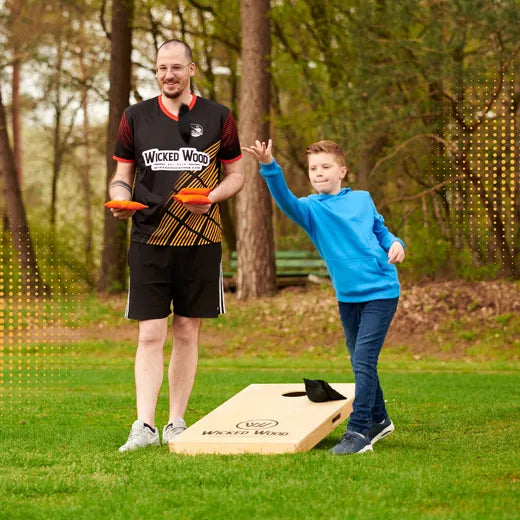
Companies and organizations are constantly looking for activities that combine teamwork, communication and fun. The cornhole game turns out to be a surprisingly good fit. It is accessible, creates lots of interaction, and makes it easy to take a break from everyday work.
Not yet familiar with the basics of cornhole? Then take a look at What is cornhole? – Basics & game overview or the beginner’s guide.
Why cornhole works so well for teams
Cornhole has a number of characteristics that make it ideal for teambuilding:
- low barrier to entry – everyone can join in, regardless of fitness level;
- clear goals – scoring points as an individual and as a team;
- lots of interaction – players coach and motivate each other;
- relaxed atmosphere – competition without it becoming too serious.
This makes cornhole suitable for groups who already know each other, but also for teams in which colleagues still need to get used to one another.
Examples of cornhole teambuilding formats
Mini-tournament on site
- Create teams of 2 people (doubles);
- Play short games to 11 or 15 points;
- Use a simple pool-and-final schedule;
- Optionally with a small prize for the winning team.
Rotation or mixed formats
- switch teammates after every game;
- combine different departments or job levels;
- make sure people with different backgrounds end up on the same team.
You can find more ideas about player numbers and formats at How many people can play cornhole?.
What does a team learn from playing cornhole?
During a cornhole teambuilding session, a team will unconsciously work on:
- communication – players discuss strategy and give feedback;
- trust – you trust that your teammate will make his or her throw;
- dealing with winning and losing – staying sportsmanlike in every situation;
- problem-solving thinking – for example: how do you deal with a strong opponent?
At the same time, the atmosphere is light and playful, allowing colleagues to get to know each other in a different way than at the office.
Combining cornhole with other activities
Cornhole fits well into a broader teambuilding program:
- as an energizer between workshops or meetings;
- as the closing activity of a training day with a small tournament;
- in combination with a barbecue or drinks on location.
By consciously using cornhole as part of an event, you strengthen the community and sense of connection within the team.
Practical tips for companies
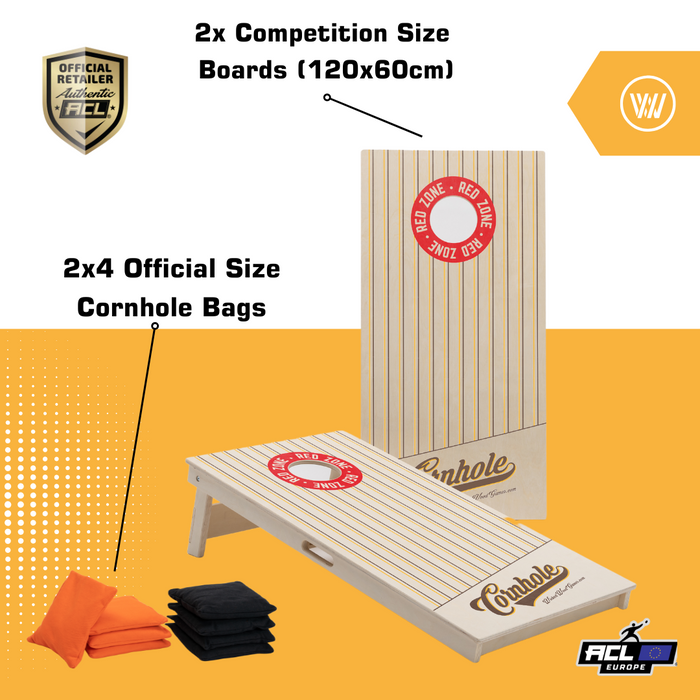
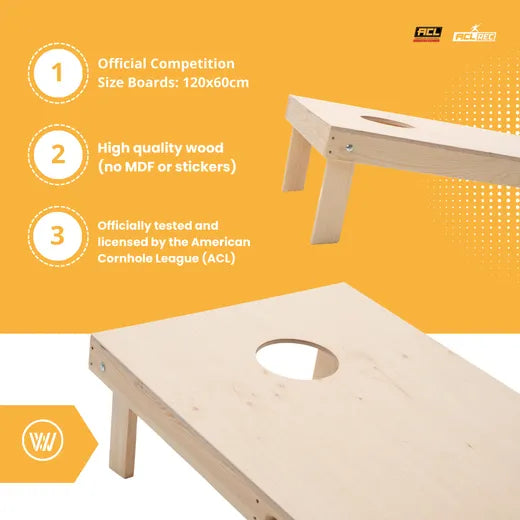
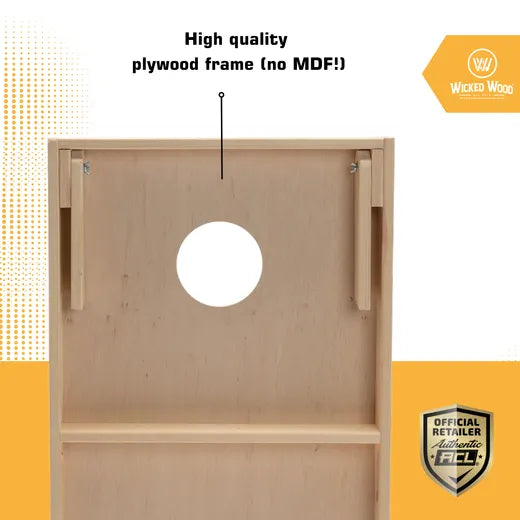
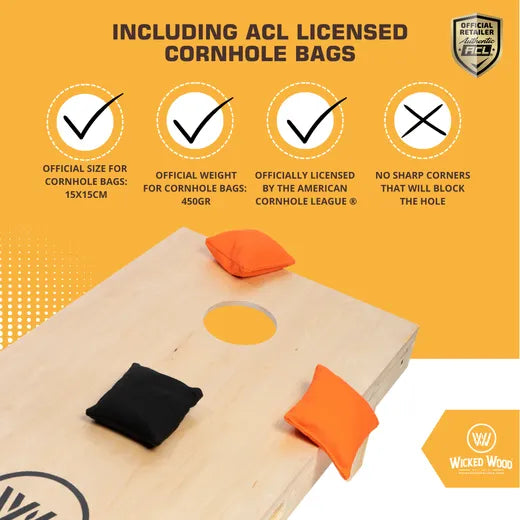
- invest in 1–3 quality cornhole sets for the office or event location;
- make sure someone knows the basic rules and scoring (or refer to Cornhole overview: rules and scoring);
- plan enough time so that everyone can throw several times;
- encourage mixed teams instead of fixed departmental groups.
Frequently asked questions about cornhole as a teambuilding activity
Why is cornhole suitable for teambuilding?
Cornhole is accessible, easy to organize and encourages cooperation, communication and fun. Colleagues work together in teams, cheer each other on and get to know each other better in an informal way.
For what group size is cornhole teambuilding suitable?
Cornhole works well for small teams of 6–10 people, but also for larger groups of 50 or more participants. With multiple sets, several games can be played at the same time.
Do participants need sports experience?
No, you don’t need a sports background for cornhole. The game is calm, not physically demanding, and is mainly about coordination and teamwork. That makes it suitable for very diverse teams.
How long does a cornhole teambuilding session last?
Depending on the group size, you can run a complete mini-tournament in 60–90 minutes. Shorter sessions of 30 minutes work well as an energizer between other program components.
Where can I find more information about the cornhole game itself?
For the basics of the game, you can visit What is cornhole? and the beginner’s guide. Rules and scoring are explained at Cornhole overview: rules, layout and scoring.